
Scam operations in Malaysia’s Forest City raise governance concerns
Police raids in Malaysia’s Forest City uncover online scam networks, prompting questions over oversight and governance.
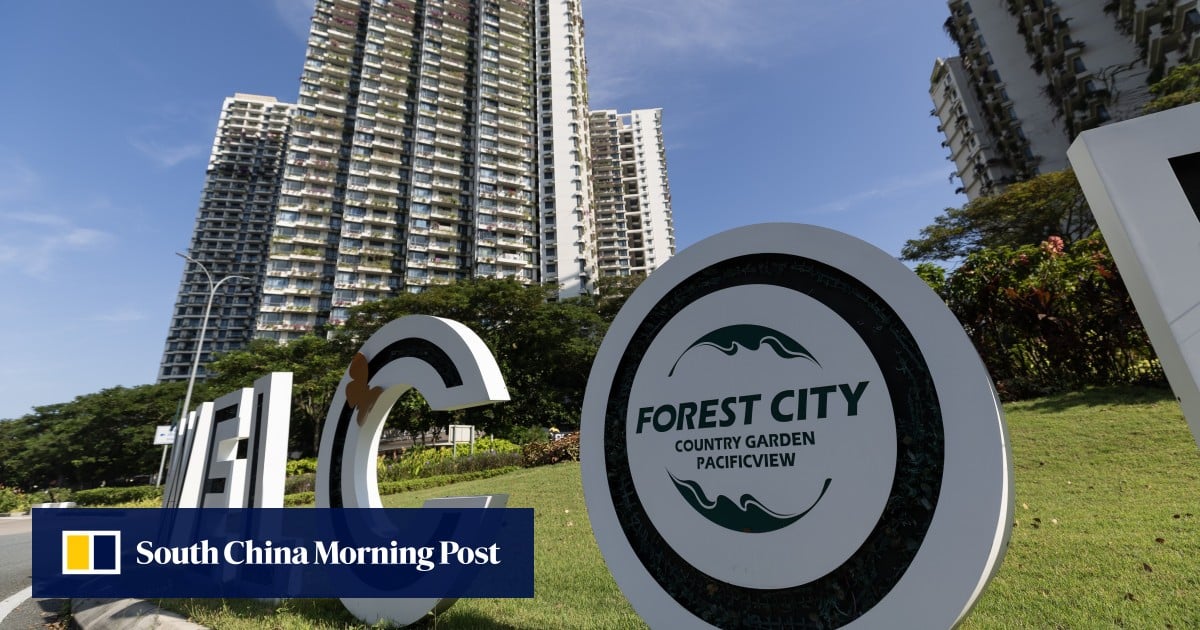
Scam operations in Forest City spark governance concerns
Malaysia’s Forest City, a sprawling $100 billion development launched in 2014 by Chinese developer Country Garden and Malaysian partner Esplanade Danga 88, is facing growing scrutiny over governance and oversight. Last week, police uncovered two alleged online scam syndicates operating across 32 luxury homes, leading to the detention of 335 individuals, including 309 Chinese nationals, 19 Indonesians, four Myanmar nationals and three Malaysians. The raids have intensified questions about whether regulatory frameworks are keeping pace with the project’s ambitions to become a global hub for wealth and mobile talent. The project, which is Malaysia’s first special financial zone and sits within the wider Johor-Singapore Special Economic Zone framework, has been designed to attract high-value workers and family offices through tax incentives and a dedicated visa track.
Organised crime has evolved beyond operating from a single ‘scam centre’, according to senior criminologist P. Sundramoorthy. He noted that the significance of the raids lies not just in the number of arrests, but in how organised networks can exploit mixed-use developments where anonymity is high, population turnover is frequent and routine social surveillance is relatively weak. Forest City’s large residential inventory, international population and relatively low occupancy in some areas could reduce the informal surveillance found in established neighbourhoods.
Challenges in policing a transient population
Munira Mustaffa, executive director of security consultancy Chasseur Group, highlighted the difficulties of policing a transient population. “You’ve got absentee owners, short-term subletting and no real sense of who is actually in those towers on any given night,” she said. “[It’s] hard to police a population nobody has counted.” Multilingual cases involving overseas victims and cross-border money flows require financial forensics and international legal cooperation that could overwhelm local enforcement designed for a smaller community, she added. The raids also revealed that some suspects had previously worked at scam centres overseas, and that flats had been booked under a company name while bungalows were registered under individual names.
Fast-moving international populations strain local enforcement. The project’s international population and relatively low occupancy in some areas could reduce the informal surveillance found in established neighbourhoods. The dispersed nature of the alleged scam operations also demonstrates that organised crime has evolved beyond operating from a single ‘scam centre’. This has created challenges for local authorities, who are not structured to handle such complex, cross-border criminal activities.
The government is offering tax incentives and a dedicated visa track to attract family offices and high-value workers. The Securities Commission has granted conditional approval to six families with close to 400 million ringgit (US$97.7 million) in indicative assets under management and is targeting 2 billion ringgit by the end of 2026. However, the recent raids have exposed potential gaps in oversight, particularly in areas where beneficial ownership and business use are not clearly defined. Property consultant Samuel Tan described the controversies as “growing pains of urban transformation rather than systemic failures”, but said Forest City’s management needed to shift from ordinary residential oversight to “commercial-grade precinct management”.
Forest City’s developer welcomed the raids and said it cooperated fully with authorities. It also backed a permanent police presence, saying a dedicated branch or service centre would improve crime prevention, emergency response and public confidence. The project, which was launched in 2014, was designed for 700,000 residents across four artificial islands by 2035. Only one island had been reclaimed and about 20,000 people were living there by 2025, after Chinese capital controls, policy shifts, the pandemic and Country Garden’s debt crisis stalled its expansion.